
| Broker | Offer | Minimum Deposit | Trade Now |
|---|---|---|---|

|
Assets: 300+
Min. Trade: $1 Payout: 100% Payout within 3 days |
$10
|
Trade Now |

|
Assets: 300+
Min. Trade: $1 Payout: 100% Payout within 3 days |
$10
|
Trade Now |

|
Assets: 300+
Min. Trade: $1 Payout: 100% Payout within 3 days |
$10
|
Trade Now |

|
Assets: 300+
Min. Trade: $1 Payout: 100% Payout within 3 days |
$10
|
Trade Now |
If you have ever wondered why the pound sterling fluctuated so violently between 2016 and 2020, the answer mostly comes down to one word: Brexit. At Th-Option we explain everything from the meaning of Brexit to the legal process, the agreements reached, and the lasting consequences for global financial markets. Whether you are a first-time investor or a trader looking for deeper context, this article gives you accurate, well-sourced answers.
What Does Brexit Mean and Where Did the Word Come From?
The word Brexit is a blend of “Britain” and “exit.” Its literal meaning is Britain’s departure from the European Union – brexit or the withdrawal of the United Kingdom from an organisation it had belonged to for more than 40 years. The term became known worldwide after the referendum of 2016 and is still used widely in politics, economics and investment circles to this day.
In legal terms, Brexit refers to the withdrawal of the united kingdom from the EU and from the european atomic energy community, a parallel treaty that the UK had also signed. The brexit process was not a simple decision but one of the most legally, diplomatically and politically complex procedures in modern European history. Understanding the roots of the word helps us follow the news and analyse markets with greater precision.
It is worth noting that similar terms such as blexit have been adopted in other contexts – for example, a political movement in the United States – demonstrating that Brexit has exerted a linguistic influence at an international level. Nevertheless, when discussing finance and capital markets, it always refers to the United Kingdom event.
Why Did the 2016 Referendum Become Such a Major Turning Point for the World?
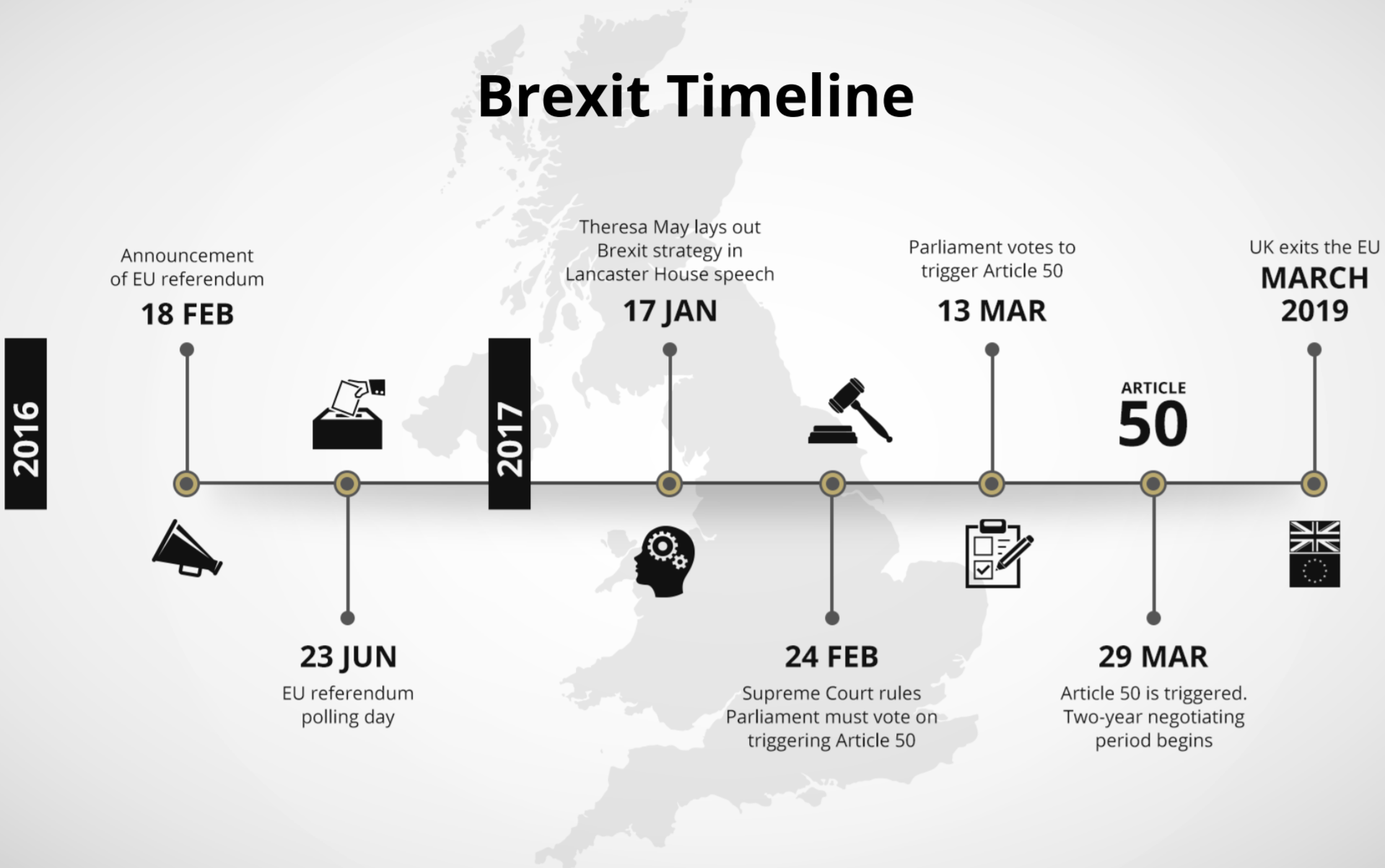
On 23 June 2016 – that date – British citizens turned out to vote in a referendum on whether to remain in the EU or leave. The result stunned the world: 51.9% voted to leave the european union, making the brexit vote the most widely discussed piece of news that decade.
Before the referendum took place, there was fierce debate between two camps. Those who campaign for brexit cited national sovereignty, border control and immigration, and the contributions the UK paid to the EU. The other side highlighted the economic impact of brexit that would follow. Both camps made intensive use of traditional media and social media to win support.
As soon as the referendum result was announced, global financial markets reacted immediately. GBP/USD fell by around 10% in a single night – the largest single move in sterling for decades. Investors who had prepared carefully and followed Brexit closely were well placed to take advantage of that volatility, particularly through Forex trading on GBP pairs.
What is Article 50 and How Did It Start the Brexit Process?
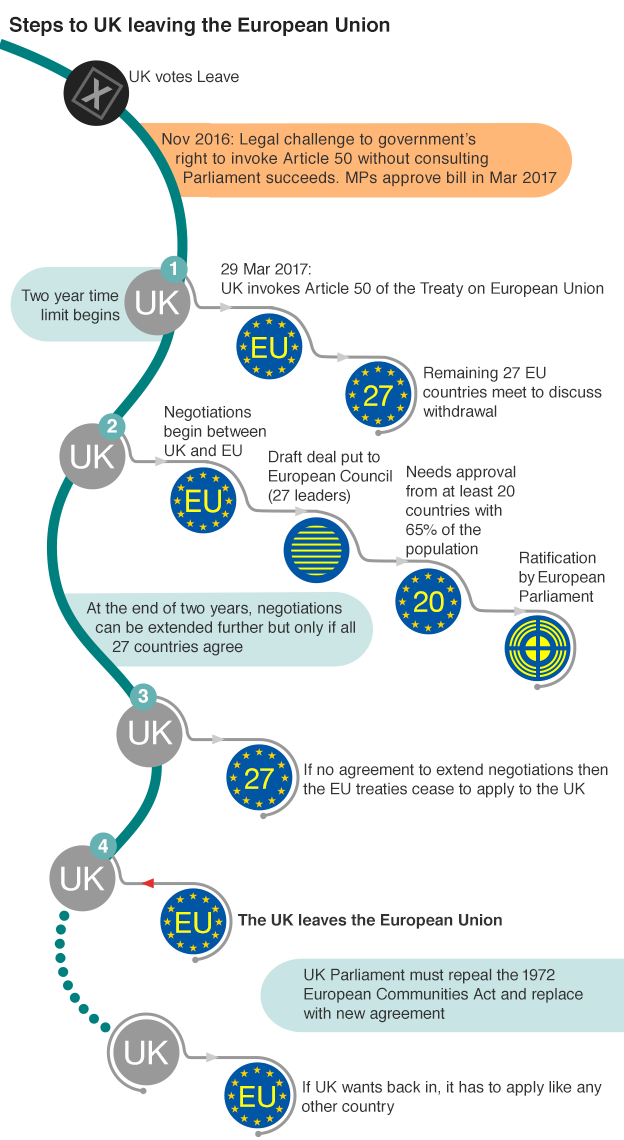
After the vote, Prime Minister Theresa May’s government faced a critical question: how to formally start the process of leaving the EU? The answer was article 50 of the Treaty of Lisbon – the legal provision that sets out how a member state can formally notify its intention to withdraw from the EU.
In March 2017, the British government formally submitted notification triggering article 50, with david davis taking on the role of the first brexit minister, leading the negotiating team with the EU. From that date, the United Kingdom had two years to negotiate the terms of its exit before membership ended automatically, unless an extension was agreed.
The eu brexit guidelines issued by the EU side in the early stages made clear that the Union would not allow the UK to enjoy the benefits of the single market without complying with its rules. That firm stance became the heart of brexit negotiations that ran throughout 2017 and 2018 in an atmosphere of intense tension and uncertainty.
The Withdrawal Agreement: The Deal That Made British Political History
After lengthy negotiations, in late 2018 Theresa May’s government and the EU reached the withdrawal agreement – a 585-page document covering everything from the rights of EU citizens living in the UK to the budget the UK had to pay, as well as a temporary framework for the trading relationship between the two sides.
The deal, however, ran into major difficulties in the house of commons, being rejected by Parliament three times in succession by large margins. The house of lords also debated the matter, and the house of commons library recorded those defeats as the largest parliamentary losses in modern British history.
The crisis led to Theresa May’s resignation and the arrival of Boris Johnson in mid-2019. Johnson renegotiated parts of the deal, particularly on the Northern Ireland border issue, and ultimately succeeded in getting it through Parliament by the end of 2019.
Brexit Delay: When the Departure Date Was Pushed Back Again and Again
One of the most confusing chapters for markets was the prolonged period of brexit delay that stretched across 2019. The original date for the UK to leave the EU was 29 March 2019, but extensions were repeatedly requested because of the deal’s failures in Parliament. Markets that had positioned for the actual exit date were forced to reposition, again and again.
New dates were set and then pushed back again. Even 31 October 2019, which Boris Johnson had declared with absolute certainty, came and went without a result. The uncertainty throughout 2019 kept GBP weak and volatile, and a number of institutional investors visibly reduced their exposure to sterling-denominated assets.
The risk of no-deal brexit – meaning the UK leaving the EU with no agreement in place – weighed on markets throughout that period. A no-deal brexit would have meant trade and travel between the UK and the EU reverting immediately to WTO rules, an outcome that most economists regarded as the worst possible result for both sides.
31 January 2020: The Day Brexit Was Legally Complete
After more than three years of turmoil, the UK formally left the EU at midnight on 31 January 2020, Brussels time. It was the first time in history that a member state had carried out a withdrawal from the european union in this way. Supporters celebrated in Parliament Square while opponents mourned the end of an era.
Even so, that date was not the final chapter, because the UK entered a transition period during which it remained subject to EU rules until the end of 2020, allowing time to negotiate a full brexit deal. During this period financial markets were relatively calm compared with the preceding year, as investors knew there was still time to adjust.
The full brexit deal between the UK and the EU was signed on 24 December 2020, just seven days before the transition period ended. The agreement covered trade in goods, fisheries and cooperation in a range of areas, but it retained significant limitations – particularly for the financial and services sectors where the UK had its greatest competitive strengths.
The Long-Term Impact of Brexit on the United Kingdom
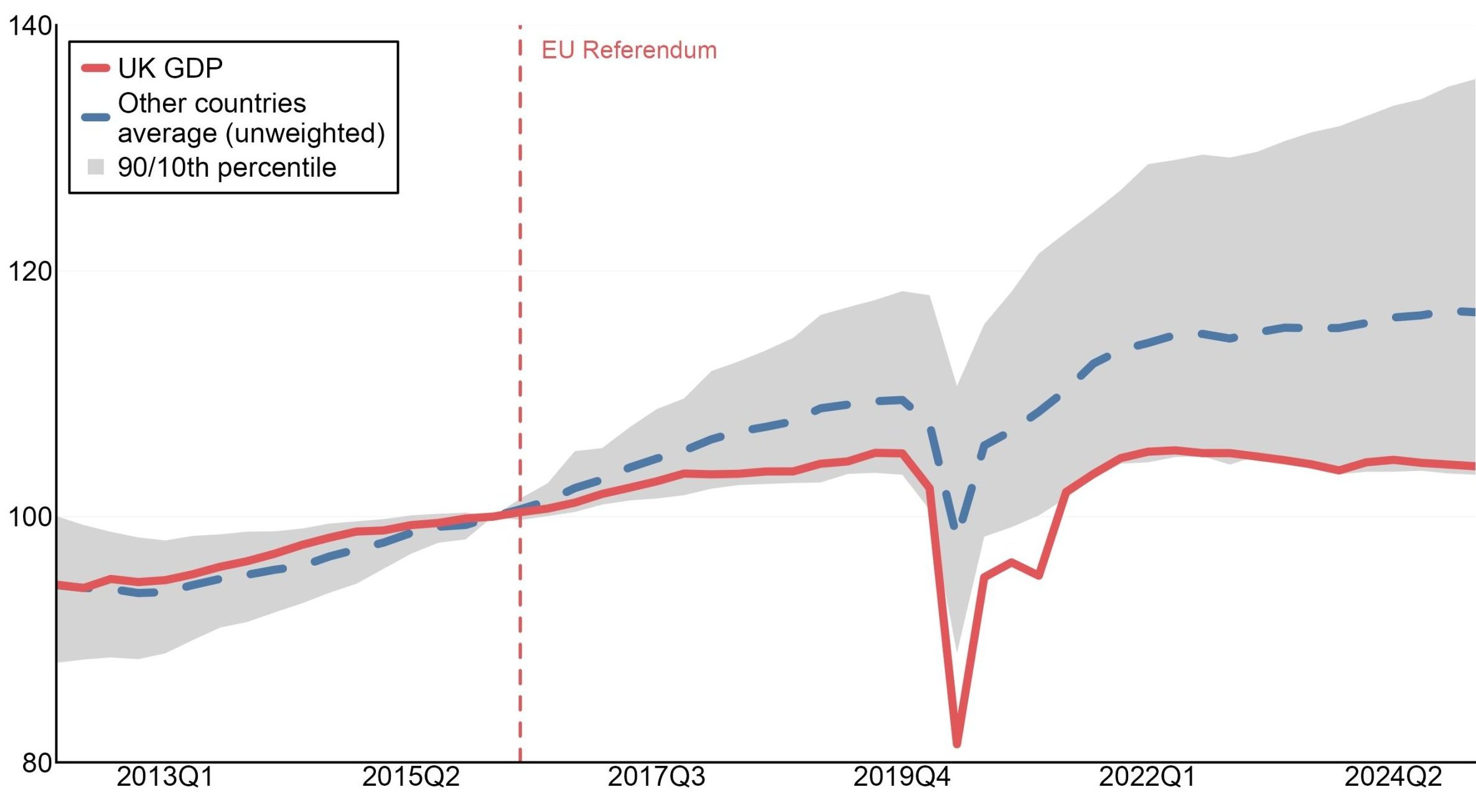
In 2021, the first year in which the UK was fully outside the EU, statistical data began to reflect the real effects. Exports of goods from the UK to the EU fell noticeably, especially food products, live animals and goods requiring additional customs documentation. Small and medium-sized businesses were hit harder than large corporations that had legal teams to manage the new requirements.
On the financial side, sterling has remained below its pre-referendum 2016 level in a meaningful way, pushing up import costs and contributing to inflation in the UK. A number of financial firms also relocated part of their operations from London to EU cities such as Dublin, Frankfurt and Paris in order to preserve their right to operate in EU markets. Traders can follow these equity movements through CFD trading on UK and European indices.
On the other hand, the UK has gained certain advantages – above all, the flexibility to negotiate free trade agreements with countries outside the EU more quickly. After leaving the EU it concluded agreements with Australia, New Zealand and Japan, opening new trade channels that would not have been possible as an EU member.
Brexit and the EU: A New Relationship Still Finding Its Shape
Even though the legal process of Brexit is complete, the relationship between the UK and the european union remains complex. The Northern Ireland border issue is still a significant source of friction, because Brexit created a situation in which Northern Ireland – part of the UK – shares a land border with the Republic of Ireland, an EU member state, and must therefore operate under special rules that differ from the rest of the UK.
Cooperation on security, intelligence sharing and scientific research also had to be renegotiated. British researchers lost certain access to European funding programmes, and students could no longer participate in the Erasmus scheme in the same way as before. These social and cultural consequences may prove more lasting than the economic ones.
Both sides still need to work together on shared interests such as climate change, energy security and pandemic preparedness. The ultimate outcome of Brexit depends on the ability of leaders on both sides to build a new relationship that genuinely benefits both parties.
Brexit and Options Trading: Looking Back and Looking Forward
For options market investors, Brexit is one of the finest case studies available on investing during periods of very high uncertainty. Every time eu’s brexit produced significant news – a parliamentary vote, an extension of the deadline, a breakdown in talks – GBP moved sharply, giving traders who followed events consistently the ability to position themselves in time.
The FTSE 100 index was also directly affected, because many companies listed on the London Stock Exchange earn revenues in euros and dollars. When sterling weakens, those foreign-currency earnings convert back into more pounds, which is why the FTSE 100 sometimes moved in the opposite direction to GBP during Brexit.
The lesson of Brexit is that political news and policy decisions can create just as many opportunities in options markets as economic data. Investors who studied Brexit seriously from 2016 to 2020 and understood how each development would affect markets frequently generated impressive returns from volatility that others simply viewed as risk.
Brexit in the Eyes of Analysts: Who Gained and Who Lost?
Brexit remains a subject of intense debate among academics and analysts. One side argues that the UK sacrificed enormous economic opportunity by leaving the world’s largest single market. The other believes that in the long run the UK will benefit from the flexibility to set its own policy. The truth may lie somewhere in between, depending on how leaders on both sides choose to use the opportunity they now have.
For financial markets, Brexit proved that political uncertainty can persist for years, not merely days or weeks. Investors accustomed to short news cycles had to rethink their approach to cope with an event whose consequences played out over such a long period. In 2019 alone there were dozens of major twists in the Brexit story.
Today, studying the history of Brexit – from the vote of 2016 through to the agreements of 2020 and 2021 – still holds genuine value for investors who want to understand how large-scale political events affect markets in the short, medium and long term, and how to apply those lessons to similar situations in the future.
Summary: What Investors Should Remember About Brexit
Brexit is a historic process that permanently reshaped the political and economic map of Europe. From the starting point of the 2016 vote, through the parliamentary crisis, article 50, the withdrawal agreement, the brexit delay and the formal departure from the EU, every stage created an impact on global financial markets. Investors who understand that context are better placed to manage the volatility that still remains.
This event also demonstrated that investing in today’s world requires an understanding of both economics and politics. The UK is still adjusting to its new status outside the EU, and the EU itself has had to manage the loss of its second-largest economy. The final outcome remains something to watch for many years to come.









Leave A Comment