




The Th-Option team has compiled comprehensive information about MT4 in this article, covering everything from what MT4 is, how to install it, how to use it, to the differences between MT4 and MT5. If you’re just starting to trade Forex or want a deeper understanding of this platform, this article answers it all.
What Is MT4 and Who Developed It?
MetaTrader 4, commonly abbreviated as MT4, is a trading platform for trading Forex and other financial assets. It was developed by MetaQuotes Software Corp, a Russian software company founded in 2005.
The platform quickly became the industry standard for trading worldwide. The main reasons are that it’s free to use, supports both Windows and mobile devices, and has an Expert Advisors system used by millions of traders.
MetaQuotes Software later developed MetaTrader 5, but MT4 has continued to maintain its popularity, especially among retail and beginner Forex traders.
What Markets and Assets Does MT4 Support?

MT4 was designed primarily for the Forex market, but most brokers have expanded its scope to support other assets as well.
Assets that can be traded on MetaTrader 4 include:
- Forex currency pairs such as EUR/USD, USD/JPY, GBP/USD
- CFDs on individual stocks from US and European markets
- Stock indices such as S&P 500, DAX, Nikkei
- Commodities such as gold, oil, silver
- Bitcoin and some Cryptocurrencies, depending on the broker
Access to these markets is done through CFDs, which means you don’t hold the actual asset but speculate on price changes.
Commodities, stocks, indices, and Forex all in one place — this is the key strength that keeps MT4 as the primary choice for many traders.
How to Download and Install MT4 on Various Devices
MT4 supports multiple platforms including Windows, MacOS, Android, and iOS. The installation process is straightforward.
For Windows, download the installer from your chosen broker’s website. It is not recommended to download from other sources because each broker has its own dedicated servers. For Mac, you need to use an emulator such as Wine or CrossOver, as MT4 does not have a native MacOS version.
For mobile, search for “MetaTrader 4” in the App Store (iOS) or Google Play (Android and iOS) and download it directly. It works almost fully featured and is suitable for monitoring the market and managing orders throughout the day.
How to Use MetaTrader 4: A Beginner’s Guide
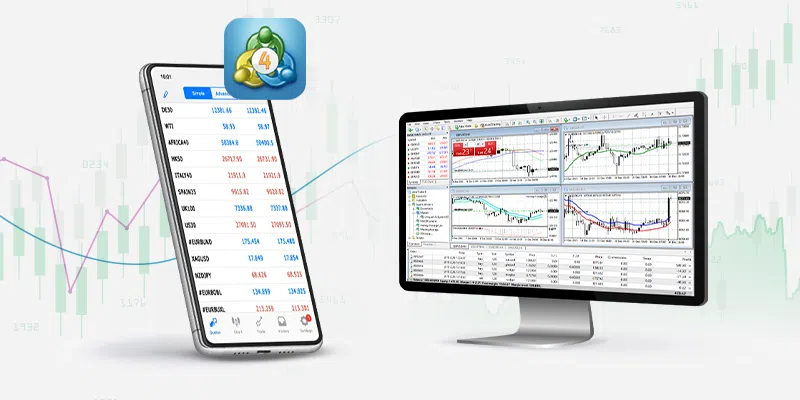
To become proficient at using MetaTrader 4, you need to start by understanding the program’s layout. The main screen consists of four main sections:
- Market Watch — displays the Bid/Ask prices of all instruments
- Navigator — displays accounts, indicators, and installed Expert Advisors
- Chart Window — the chart window for analyzing price
- Terminal — displays open trades, history, and alerts
To open your first trade on MT4, right-click on the chart and select “New Order” or press F9, then select the volume, set Stop Loss and Take Profit, and press Buy or Sell.
The MT4 layout looks like a lot at first, but after using it for a few days everything will start to feel familiar. Using MT4 in practice is not as difficult as it seems.
What Order Types Does MT4 Support?
MT4 supports multiple order types, providing flexibility in trade planning.
| Order Type | Meaning | When to Use |
| Market Order | Opens a trade at the current market price immediately | When you want to enter immediately |
| Buy Limit | Buys when the price drops to a specified level | Waiting to buy at a price lower than current |
| Sell Limit | Sells when the price rises to a specified level | Waiting to sell at a price higher than current |
| Stop Loss | Automatically closes a trade when loss reaches a specified level | Limiting damage |
| Take Profit | Automatically closes a trade when profit reaches a specified level | Locking in profit without having to watch constantly |
Pending Orders in MT4 are very useful for people who can’t sit in front of their screen all the time. Set entry and exit points in advance, then let the system handle it.
Setting Stop Loss and Take Profit every time you open a trade is the best habit that beginner traders should practice. Stop Loss and Take Profit are not just tools — they are risk management discipline.
What Indicators Does MT4 Have and How to Use Them?
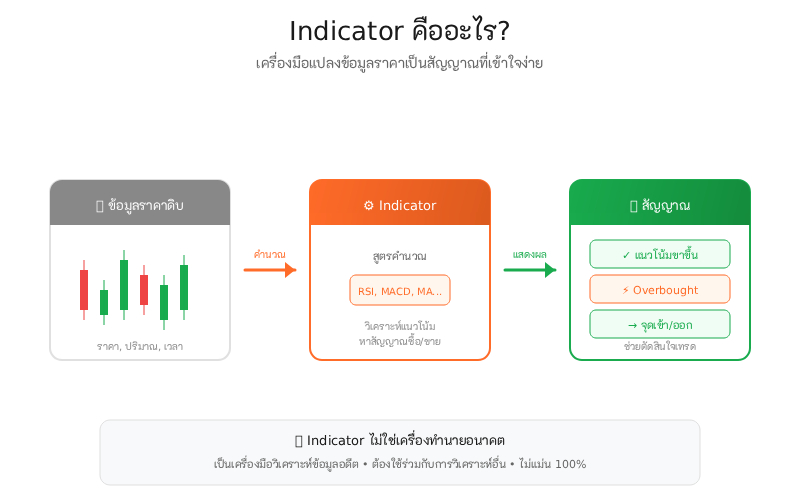
MT4 has over 30 built-in indicators, covering Trend, Oscillator, Volume, and Bill Williams indicators. Commonly used ones include Moving Average, RSI, MACD, Bollinger Bands, and Stochastic.
Adding indicators is very easy — click on the Insert menu, select Indicators, then choose the one you want, or drag it from the Navigator directly onto the chart. Each MT4 indicator has adjustable parameter settings.
In addition, MT4 supports custom indicators written in the MQL4 language, which is open to developers and traders who need specialized tools. The online community has thousands of ready-made indicators available for free download.
What Are Expert Advisors and How Do They Work on MT4?
Expert Advisors, or EAs, are automated programs that run on MT4 and trade on your behalf according to a defined strategy. They are written in the MQL4 language, just like indicators.
EAs can do everything a manual trader does — opening orders, setting stop losses, closing positions, and managing various limits. The difference is that they work 24 hours without tiring and without emotion interfering.
Using an Expert Advisor on MT4 requires MT4 to be running at all times. If your computer shuts down or loses internet connection, the EA will stop working. Traders who use EAs seriously often use a VPS to keep MT4 running continuously.
MT4 vs MT5: What’s the Difference and Which Should You Choose?
Both platforms are developed by MetaQuotes, but there are several differences that affect real-world use. A common misconception is that MT5 is better in every way, but in reality it depends on what you’re trading.
| Feature | MT4 | MT5 |
| Launch year | 2005 | 2010 |
| Primary market | Forex | Forex, stocks, futures |
| Timeframes | 9 timeframes | 21 timeframes including Weekly |
| Programming language | MQL4 | MQL5 |
| Order types | 4 types | 6 types |
| Hedging | Supported | Depends on account settings |
| Strategy Tester | Single currency | Multi-currency simultaneously |
| Depth of Market | No | Yes |
| EA Compatibility | Does not support MT5 EAs | Does not support MT4 EAs |
| Forex popularity | Very high | Growing |
| EA/Indicator community size | Very large | Growing |
In summary, if you mainly trade Forex and want to use EAs or indicators from the large existing community, MetaTrader 4 is still the better answer. But if you want to trade real stocks, futures, or need a wider range of timeframes, MetaTrader 5 is more suitable.
For beginners just starting to trade Forex, choose MetaTrader 4 first. The simple reason is that there are far more learning resources in both Thai and English, and most brokers in Thailand still primarily support this platform.
Popular Brokers in Thailand That Support MetaTrader 4
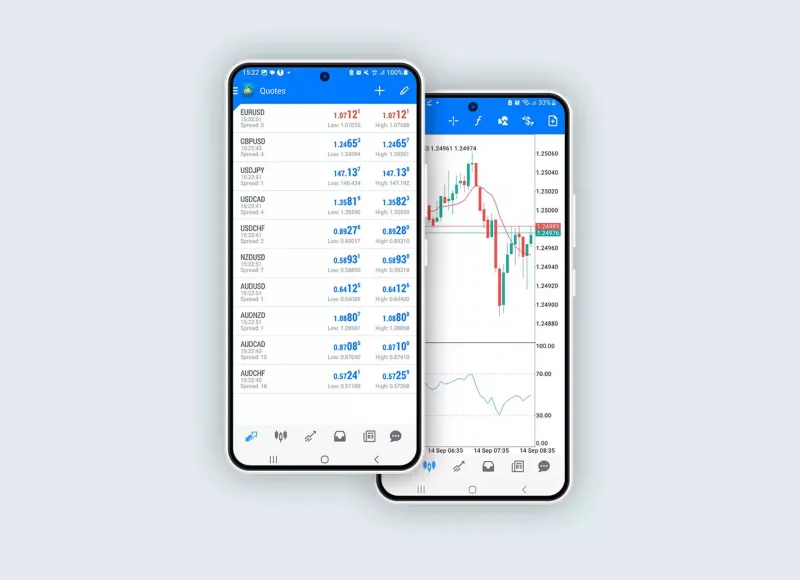
Not every broker supports MetaTrader 4. Some use their own platforms, some only support MT5, and some support both. Checking that your chosen broker supports the platform you want is an important step before opening an account.
| Broker | MT4 | MT5 | Other Platforms | Best For |
| Exness | ✓ | ✓ | Exness Terminal (Web) | Forex, CFD, commodities |
| XM | ✓ | ✓ | XM WebTrader | Forex, stocks, indices |
| FBS | ✓ | ✓ | FBS Trader (own app) | Forex, CFD |
| Pepperstone | ✓ | ✓ | cTrader, TradingView | Forex, CFD, ECN |
| IC Markets | ✓ | ✓ | cTrader | Forex, CFD, ECN |
| IQ Option | ✗ | ✗ | IQ Option Platform (own) | Digital Options, CFD |
| Exnova | ✗ | ✗ | Exnova Platform (own) | Binary Options, CFD |
| eToro | ✗ | ✗ | eToro Platform, Copy Trading | Copy Trading, stocks, Crypto |
The brokers that best support MetaTrader 4 in Thailand are Exness, XM, and FBS, because they offer Thai language support, Thai-language customer service, and dedicated learning resources for beginners.
For traders focused on fast execution and low ECN spreads, Pepperstone and IC Markets are better options, though Thai language support may be more limited.
IQ Option and Exnova use their own platforms and focus on Digital Options and Binary Options, which is different from traditional Forex trading that uses this platform.
Is MT4 Safe? How Is It Regulated?
MT4 is just software, not a broker. The safety of your funds therefore depends on the broker you choose, not the platform itself.
MetaQuotes Software Corp, which developed MT4, is not directly subject to financial regulation, but brokers that provide MT4 services must hold licenses from regulatory authorities such as the Financial Services Commission or FSC, and European-level organizations such as CySEC.
Before opening an account with a broker that uses MT4, always check whether that broker holds a license from a credible authority. The MT4 platform itself is safe — but some brokers are not.
Who Is MT4 Suitable For, and What Are Its Limitations?
MetaTrader 4, or MT4, is suitable for many groups of traders, but not for everyone.
Groups suited to MT4:
- Beginner Forex traders who want to start with a standard platform
- Traders who use EAs and need the large MQL4 ecosystem
- People who trade on mobile and need a stable Android and iOS experience
- Traders focused on Forex, CFDs, commodities, and indices
MT4 limitations you should know:
- No native Mac version — an emulator is required
- Does not support trading real shares — only CFDs on stocks
- Fewer timeframes than MetaTrader 5
- Some brokers’ execution systems do not support full ECN
- MetaTrader 4 does not have a multi-currency strategy testing system
Learning how to trade Forex on MT4 is quick, but becoming a good trader requires spending more time practicing market analysis than learning the tools.
How to Open an Account and Start Using MT4
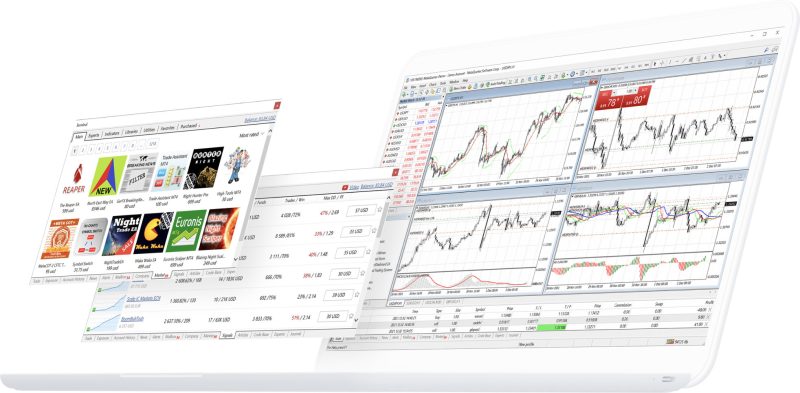
Opening an account to use MT4 is done through a broker that supports the platform. The main steps are as follows:
- Choose a licensed broker that supports MT4
- Apply for a real account or a demo account
- Download MT4 from the broker’s website
- Log in with the account credentials sent by the broker via email
- Deposit funds and start trading
It is always recommended to start with a demo account first. MetaTrader 4 offers a free demo account with no deposit required. Use it to learn the layout, practice opening orders, and test strategies with no real risk.
On MT4, switching between a demo account and a real account is very easy — just right-click on the account name in the Navigator and select Login.
Opening an Account and Getting Started with MT4 as a Beginner
Forex can look complicated at first for beginners, but opening an account to trade Forex on MT4 doesn’t take long. Most brokers allow you to apply online without visiting a branch. Fill in your personal details, verify your identity, and receive your account credentials by email within a few hours.
After opening an account, the next step is to download MT4 from the broker’s website and log in with the credentials received. If you’re not ready to trade with real money yet, choose a demo account first. Practice understanding the Forex market and try opening and closing trades until you’re comfortable with the platform.
How to Set Stop Loss Correctly in MT4 from the Start
Using MT4 effectively begins with one small habit: always setting a Stop Loss every time you trade, without exception. Many people who are new to Forex trading skip this step because they think they can monitor it themselves, but the Forex market moves fast and waits for no one.
To set a Stop Loss in MT4, you can do it when opening the order. In the New Order window, always enter the Stop Loss level in the “Stop Loss” field before pressing Buy or Sell. Developing this habit from the start, together with opening an account with a trustworthy broker, are the two things that separate traders who survive long-term from those who blow their account in the early stages.
In Summary: MT4 or MT5 — Which Is Better?
MetaTrader 4 is a platform suitable for beginners who want to learn about forex trading. The system is easy to use, has many indicators and Expert Advisors (EAs), users can learn to use it quickly, and most brokers support this platform.
MetaTrader 5 has more advanced features, allowing users to trade stocks and futures, as well as use more complex analytical tools and test their strategies across multiple markets.
This platform is a tool that delivers results according to your ability to manage risk and self-discipline. Start with a demo account, practice until you’re comfortable, then switch to real money.
FAQ: Frequently Asked Questions About MetaTrader 4
What Can You Trade on MT4?
MetaTrader 4 supports trading Forex (major, minor, and exotic currency pairs), CFDs on stocks, stock indices such as S&P 500 and DAX, commodities such as gold and oil, as well as Bitcoin and some cryptocurrencies. This depends on which assets your broker has made available to trade, because the platform is just a tool — the actual tradable assets depend on the broker.
What Is the Difference Between MT4 and MT5?
The main difference is that MetaTrader 4 was designed specifically for Forex, has 9 timeframes, and uses the MQL4 language. MetaTrader 5 supports more markets, has 21 timeframes including Weekly, has 6 order types, and uses the MQL5 language which processes faster. However, EAs and indicators between the two platforms are not interchangeable.
What Is an MT4 Account?
A MetaTrader 4 account is a trading account opened with a broker and accessed through this platform. There are two main types: a demo account (uses virtual money for free practice) and a real account (uses real money). Some brokers further subdivide into Standard, ECN, Pro, depending on the spread and execution structure.
What Tools Does MT4 Have?
The main tools in MetaTrader 4 include over 30 indicators (Moving Average, RSI, MACD, Bollinger Bands, etc.), charting tools (trend lines, Fibonacci, channels), a pending orders and stop loss system, Expert Advisors for automated trading, a Strategy Tester for backtesting strategies against historical data, and an Alerts system for notifications when the price reaches a specified level.
Is Forex Trading Legal in Thailand?
Trading Forex in Thailand through overseas brokers licensed in foreign jurisdictions is in a legal grey area. The Bank of Thailand does not directly license foreign Forex brokers, but there is no law that explicitly prohibits individuals from trading through overseas platforms. In practice, retail traders in Thailand can use overseas broker services, but it is advisable to study the regulations further and consult a financial law expert if in doubt.
What Is the Difference Between CFD and Forex?
Forex is the direct trading of currency pairs such as EUR/USD — it is a financial instrument with its own market. CFD (Contract for Difference) is a contract to speculate on the price difference of any asset without holding the actual asset. CFDs can reference stocks, indices, commodities, or even Bitcoin. Technically, trading Forex through most retail brokers is also considered a CFD, because you are not actually exchanging currency but speculating on price changes.
Read more about:






Leave A Comment