




Is IC Markets good? This is a common question among Thai traders before deciding to open an account. This Australian broker is well known for its low spreads and fast order execution. Th-Option has studied real user experience and gathered IC Markets reviews from various trader groups to help you make a well-informed decision.
What Is IC Markets? Getting to Know the IC Markets Broker
What is IC Markets in simple terms? It is a forex and CFD broker founded in Australia in 2007. ICMarket or IC Markets operates under the full name International Capital Markets Pty Ltd. The broker has grown into one of the largest trading volume brokers in the world, with reported daily volumes exceeding tens of billions of dollars. IC Markets positions itself as a True ECN broker, directly connecting traders to liquidity providers.
IC Markets offers a wide range of tradable assets suitable for all types of traders, including more than 60 forex currency pairs, precious metals such as gold and silver, global stock indices, commodities, bonds, and popular cryptocurrencies. What makes IC Markets stand out is its strong focus on low spreads and fast execution. The broker claims spreads starting from 0.0 pips on Raw Spread accounts and low latency thanks to servers located near major financial hubs.
IC Markets’ headquarters are located in Sydney, Australia, with additional offices in Cyprus and Seychelles to serve clients across different regions. Having multiple offices allows the broker to operate globally under region-appropriate licenses. IC Markets is particularly popular among high-frequency traders who seek the lowest possible trading costs.
How Reliable Is IC Markets? Is It Safe?
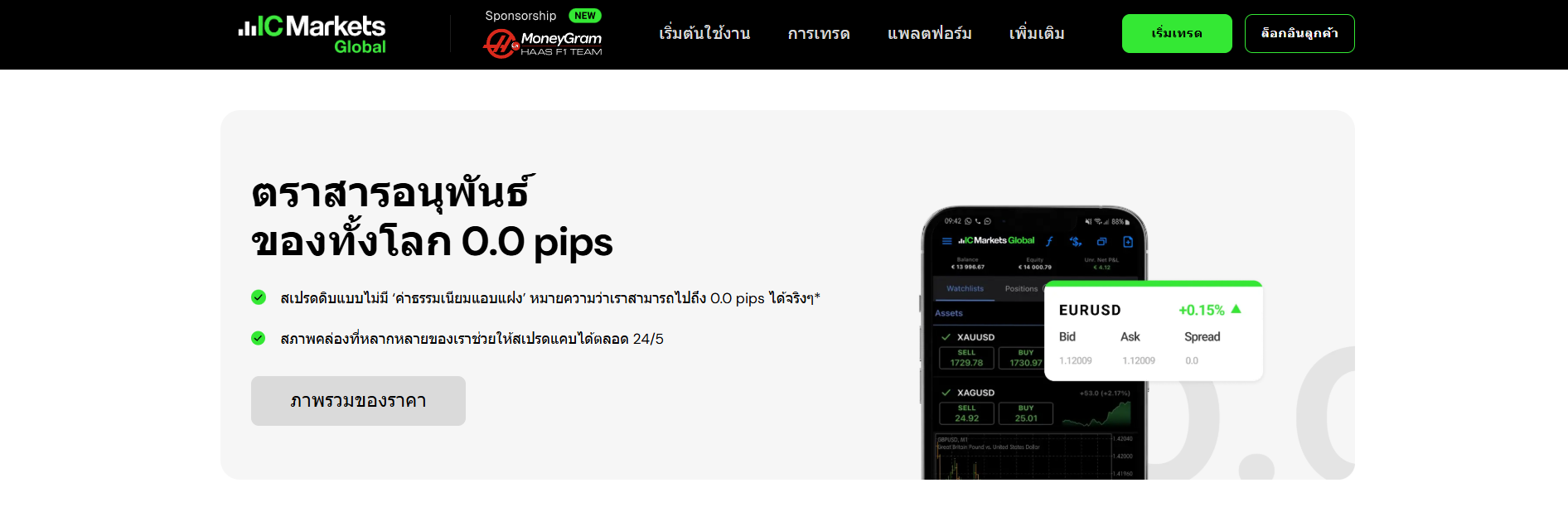
The question “Is IC Markets good?” in terms of reliability should be evaluated from multiple angles. IC Markets has over 17 years of operating history, has survived multiple financial crises, and has grown into one of the world’s largest brokers. This is a strong indication of financial stability and a reasonable level of trustworthiness.
IC Markets Licenses and Regulation
IC Markets or ICMarket holds licenses from several well-known regulatory authorities, which is a key strength compared to brokers that operate solely under offshore licenses. Being regulated by strict authorities means the broker must comply with robust rules, undergo regular financial audits, and provide a certain level of client fund protection.
| Regulator | Country | Regulatory Strength | Company |
| ASIC | Australia | Very High | International Capital Markets Pty Ltd |
| CySEC | Cyprus | High | IC Markets (EU) Ltd |
| FSA | Seychelles | Medium | IC Markets (SC) |
| SCB | Bahamas | Medium | IC Markets Global |
For Thai traders, accounts are usually registered under the FSA Seychelles or SCB Bahamas licenses, as non-European and non-Australian clients typically cannot open accounts under ASIC or CySEC. However, the fact that the parent company is regulated by ASIC, one of the strictest regulators in the world, demonstrates the broker’s high operational standards.
Is IC Markets Good? Pantip Reviews from Real Users
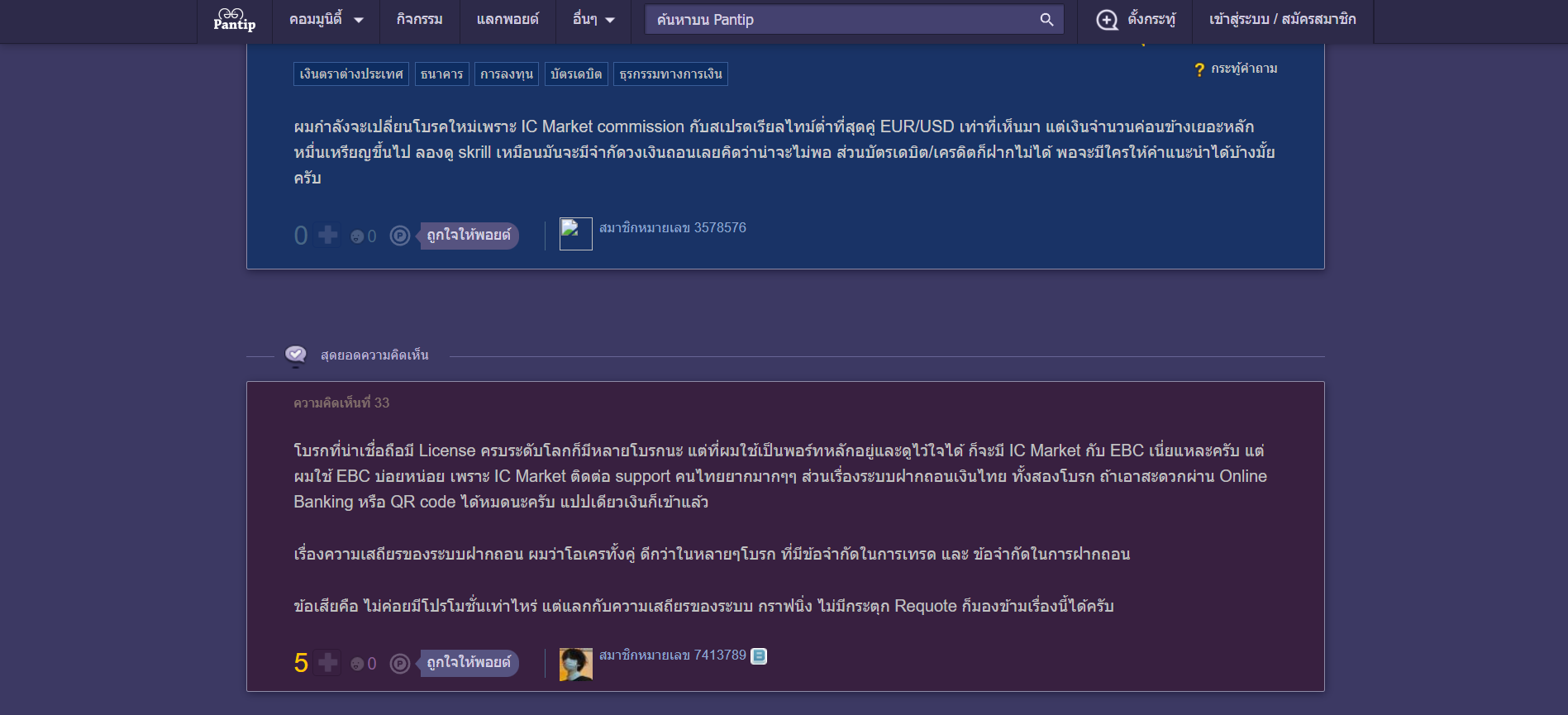
“Is IC Markets good?” is a popular search term among Thai traders looking for real user reviews. Based on feedback from IC Markets Pantip threads and Thai trading communities, most opinions are positive, especially regarding genuinely low spreads and smooth withdrawals.
Common positive feedback on Thai forums includes truly low spreads, particularly on Raw Spread accounts where spreads on major currency pairs are close to zero, fast execution suitable for scalping, no abnormal requotes or slippage, reliable withdrawals without unjustified rejections, and stable trading platforms with minimal server downtime.
Negative feedback also exists. Some traders mention that Thai-language support is not as strong as brokers that focus heavily on the Thai market, bonuses and promotions are fewer compared to some competitors, minimum deposits are higher than certain brokers, and some local Thai deposit methods may be less convenient.
IC Markets Account Types and Trading Conditions
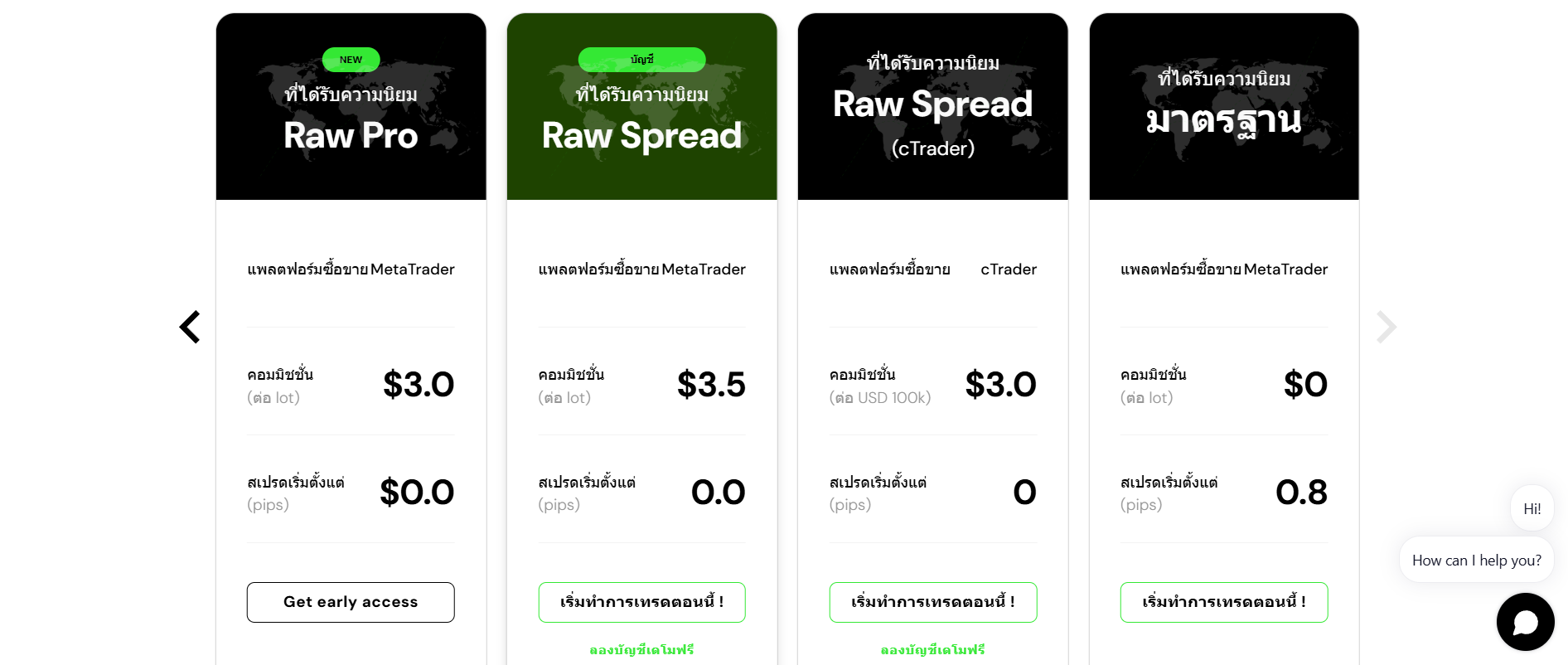
IC Markets offers multiple account types designed to meet the needs of traders with different experience levels and trading styles. Choosing the right account can help you achieve the most cost-efficient trading conditions for your strategy. Each account type has a different cost structure: some accounts include all costs in the spread, while others charge a separate commission.
What Is the Difference Between Standard and Raw Spread Accounts?
IC Markets mainly offers two core account types: Standard and Raw Spread. The key difference lies in their pricing structure. The Standard account includes all trading costs within the spread, making it simple and easy to calculate. In contrast, the Raw Spread account offers extremely low spreads but charges a separate commission. Traders who trade high volumes often find that the Raw Spread account results in a lower overall trading cost.
| Feature | Standard | Raw Spread (cTrader) | Raw Spread (MT4/MT5) |
| EUR/USD Spread | From 0.8 pips | From 0.0 pips | From 0.0 pips |
| Commission | None | $3/lot/side | $3.5/lot/side |
| Platform | MT4, MT5 | cTrader | MT4, MT5 |
| Maximum Leverage | 1:500 | 1:500 | 1:500 |
| Minimum Deposit | $200 | $200 | $200 |
For beginners who do not trade frequently, the Standard account may be more suitable because there is no commission and costs are easier to calculate. However, for scalpers or day traders who trade large volumes, the Raw Spread account clearly offers lower overall costs, especially on major currency pairs where spreads are close to zero.
What Is the Minimum Deposit at IC Markets? Detailed Deposit Methods
“IC Markets minimum deposit” is a common question among traders before opening an account. Currently, IC Markets requires a minimum deposit of $200, which is higher than some brokers that allow deposits as low as $1–$10, but still accessible for most traders. This minimum deposit applies to all account types.
IC Markets supports multiple deposit methods to suit different preferences. Each method differs in processing time and fees. Some methods are instant, while others may take several business days.
| Method | Processing Time | Fees | Minimum |
| Credit/Debit Card | Instant | Free | $200 |
| Skrill | Instant | Free | $200 |
| Neteller | Instant | Free | $200 |
| Bank Transfer | 2–5 business days | Depends on the bank | $200 |
| PayPal | Instant | Free | $200 |
| USDT / Bitcoin | Within 1 hour | Network fee | $200 |
For Thai traders, e-wallets such as Skrill or Neteller are often the most convenient because deposits are fast and there are no international transfer fees. Cryptocurrency deposits are also a good option for those who already hold crypto assets. Direct bank transfers may take longer and usually involve higher fees.
How Long Do IC Markets Withdrawals Take? Any Issues?
Withdrawals are a critical concern for all traders. If withdrawals are difficult or unreliable, other broker features become meaningless. Based on real user reviews, most traders report that withdrawals from IC Markets are smooth, processed on time, and without unjustified fund holds.
Withdrawal times vary by method. E-wallet withdrawals such as Skrill and Neteller usually take 1–2 business days. Credit card withdrawals typically take 3–5 business days due to card processing procedures. Bank wire withdrawals may take 3–7 business days depending on the receiving bank and country. Cryptocurrency withdrawals usually take 1–2 business days.
IC Markets follows an industry-standard policy requiring withdrawals to be made back to the original deposit method first, as part of anti-money-laundering regulations. For example, if you deposit via credit card, you must withdraw back to the same card up to the deposited amount before withdrawing profits via other methods. The first withdrawal may take longer due to identity verification, but subsequent withdrawals are usually faster.
Trading Platforms and Access at IC Markets
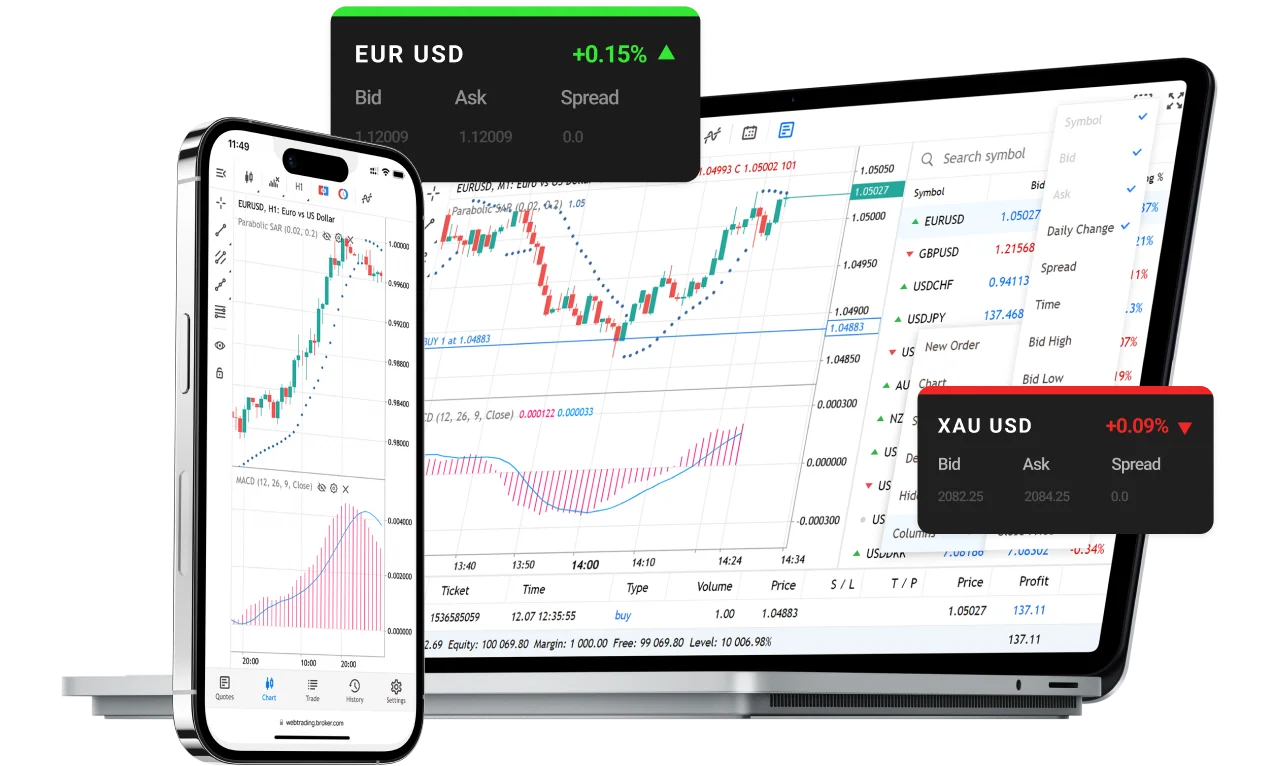
IC Markets supports several trading platforms to accommodate different trader preferences. The main platforms are MetaTrader 4 (MT4), MetaTrader 5 (MT5), and cTrader. MT4 is the most popular due to its simplicity and wide EA support, MT5 offers more advanced features, and cTrader focuses on speed and transparency.
IC Markets Login and Trading System Usage
Logging in to IC Markets is straightforward via the website, mobile apps, or directly through the trading platforms. After registration and verification, you receive separate login details for the Client Area and your trading account. The Client Area is used for account management, deposits, withdrawals, and reports, while the trading account is used to access MT4, MT5, or cTrader.
To log in to a trading platform, download MT4, MT5, or cTrader from the IC Markets website or the App Store / Play Store. Open the platform, select “Login to Account,” enter your trading account number and password, choose the correct server from the Client Area, and log in. If you forget your password, it can be reset via the Client Area.
IC Markets also offers WebTrader for traders who prefer not to install software. While it has fewer features than the full desktop platforms, it is convenient for trading directly from a web browser.
IC Markets Customer Service and Thai Language Support
Thai language support is a common concern among Thai traders. IC Markets does not specifically focus on the Thai market like some brokers, so Thai language support is limited.
IC Markets offers several support channels. Live Chat on the website responds fairly quickly but is usually in English. Email support typically replies within 24 business hours. Phone support is available with multiple regional numbers, but there is no dedicated Thai number. Traders who are not comfortable with English may need to use translation tools.
That said, many issues can be resolved through the Client Area or the FAQ section on the IC Markets website, which provides comprehensive documentation, mostly in English. There are also Thai trading communities on social media and forums where users share experiences and advice.
Pros and Cons of IC Markets Broker
Understanding both the advantages and disadvantages helps determine whether IC Markets suits your needs. No broker is perfect, and each has strengths and weaknesses. The key is finding a broker whose strengths align with your trading priorities.
Pros of IC Markets
IC Markets offers several strengths that make it popular among traders worldwide, especially those who prioritize low costs and fast execution. Spreads are extremely low, particularly on Raw Spread accounts where spreads start from 0.0 pips on major currency pairs, resulting in lower trading costs than many brokers. Order execution is fast with minimal slippage, making it well suited for scalping and day trading strategies that require precise market entry and exit.
Licensed by ASIC, one of the world’s most stringent regulatory authorities, IC Markets meets high operational standards and inspires confidence among traders. It supports multiple trading platforms including MT4, MT5, and cTrader, allowing traders to choose according to their preferences. The broker offers a wide range of tradable assets to suit various needs, with leverage up to 1:500 for added flexibility. IC Markets fully supports Expert Advisors (EA) and automated trading, has a long operating history of over 17 years, and is recognized as one of the largest brokers in the world.
Disadvantages of IC Markets You Should Know Before Signing Up
Despite its many strengths, IC Markets has some limitations to consider. The minimum deposit of $200 is higher than some brokers that allow deposits as low as $1–$10, which may be a barrier for beginners who want to start with a small amount. Thai-language support is not as strong as brokers that specifically focus on the Thai market, so communication in English may be required in certain situations.
Bonuses and promotions are very limited or almost non-existent, unlike some brokers that offer deposit bonuses or frequent promotional campaigns. IC Markets focuses on low trading costs rather than attracting clients with bonuses. Thai clients are often registered under the Seychelles or Bahamas licenses, which are less strict than ASIC. In addition, some deposit methods from Thailand may be less convenient, especially bank transfers that can involve relatively high fees.
Who Is IC Markets Suitable For? Beginners or Professional Traders
IC Markets is more suitable for certain groups of traders than others. Understanding what type of trader you are will help you decide whether this broker fits your needs. A broker that is perfect for one trader may not be ideal for another, depending on trading style, experience level, and personal priorities.
The traders who benefit the most from IC Markets are scalpers and day traders who require ultra-low spreads and fast order execution. Experienced traders who do not need extensive support can take full advantage of the broker’s low-cost structure. Those who use Expert Advisors or automated trading systems will find IC Markets highly accommodating. Traders who prioritize trading costs over bonuses will appreciate the transparent fee structure.
On the other hand, beginners who need strong Thai-language support may want to consider brokers that focus more on the Thai market. Traders with very limited capital who want to start with less than $200 may need to look for brokers with a lower minimum deposit. Those who value bonuses and frequent promotions may also feel that IC Markets does not fully meet their expectations.
IC Markets Review Summary: Is IC Markets Good and Worth Trading With?
Based on an in-depth IC Market review and IC Markets review, the conclusion is that IC Markets is a high-quality and reliable broker, especially for traders who prioritize low trading costs and fast execution. Its ASIC license and long operating history provide strong credibility. Truly low spreads as advertised and smooth withdrawal processes have made IC Markets popular among traders worldwide.
Is IC Markets good for Thai traders? The answer is yes for experienced traders who care more about costs than Thai-language support. Low spreads and fast execution are its clear strengths. However, if you are a beginner who needs more guidance and prefers communication in Thai, you may want to consider other brokers as well.
Before making a final decision, it is recommended to open a demo account to test the platform and trading conditions yourself. Check whether the spreads, execution speed, and overall service match your expectations. If you are satisfied, you can then open a live account and start trading with funds you can afford to lose.
Risk Warning: Trading Forex and CFDs involves high risk and may result in the loss of all invested capital. You should fully understand the risks before trading and never invest money you cannot afford to lose.
Read more about:





Leave A Comment