




Th-Option has prepared for you everything you need to know before starting forex trading. We aim to introduce you to the basics of Forex trading, explain key concepts, and present strategies designed to help beginners build a solid foundation. This review offers expert advice for navigating the Forex market with confidence.
What is Forex?
Forex market, also known as foreign exchange, the global currency trading market, comprises buying and selling foreign currencies as far as a global market is concerned. It’s the largest financial market-the largest one in the world. More than a trillion dollars hits the floor in just a day. The particular market allows individuals and institutions to use their experience and financial resources to guess where the value of one currency will move up with respect to another, aiming at the differences because of economic, political, or social factors.
The forex market is slightly different from the stock market in that it operates 24 hours a day, five days a week, providing enormous liquidity and flexibility. Participants can easily get into and out of currency trades, making it a very attractive option for short-term and long-term trading. It is an option to think of the trader among those who cannot risk at very high prices.
How Forex trading works?
Forex trading is the act of buying one currency with another in otherwise simultaneous transaction. Each transaction is executed via a selected pair of currencies, such as USD/THB or EUR/THB, in which the base currency is the first currency while the second one stands for the quote. If the trader anticipates the base currency to rise against the quote currency, he buys the pair. Conversely, if he foresees the base currency to fall, he sells the pair. The difference between the purchase price and the sale price is then considered the gain or loss on the trade.
Price change in the forex market is due to the interplay between supply and demand which stem from economic releases, interest rates, particular political events, and market mood. Associated with a country’s economy is usually a strong currency when being seen as good. Some worrisome news or data releases often trigger the selling of that nation’s currency.
| Action | Currency Pair | Price |
|---|---|---|
| Buy | USD/THB | 34.50 |
| Sell | USD/THB | 34.80 |
| Profit | 30 satang | Price increase |
In this case, the trader would buy USD/THB at 34.50 and sell it at 34.80. Realizing a 30 satang, 0.30 THB profit. To manage risks, traders would normally employ stop-loss and take-profit orders. What happens with this is that the trade is automatically closed when it reaches that level. It makes trading in the Forex market a very structured, controllable, and versatile exercise that has room for both long- and short-term strategies.
Setting up for Forex trading success
Doing well in Forex and Binary Options trading requires significant planning. This commences with choosing a trustworthy Forex broker, with the knowledge that an easy-to-use platform, cheap spreads, and excellent client support are obligatory. But a little bit more important is the trading plan drawn up outlining the goals, risk tolerance, and strategies.
But, apart from the simple forms being touched on, something a trader should always bear is adopting and maintaining a structured routine. For a better investor focus, the trader must, beside this, trade within specific hours and maintain a journal on trading sessions and trade results in order to assess the trade performance and identify weaknesses and strengths. Doing the same thing day-to-day is often considered more important in trade than working with different strategies day-day.
Understanding Forex market basics
The Forex market is all about trading pairs of currencies, in which one currency is traded for another. A significant aspect in trading involves a profound understanding of how these pairs function. Each pair consists of a base currency and a quote currency; therefore, odds on the currency price based on how much quote currency is variable to buy a unit of base currency.
Supply and demand, in consideration of economic data, interest rates, political events, and global market sentiment, is the driving factor in the movement of the market. A country’s economy gains strength, and its currency most of the time gains value; however, when the economy becomes weak, devaluation of the currency often occurs. This continuous surge of information generates price fluctuations that traders aspire to gain from.
Currency pairs: Majors, Minors and Exotics
There are major currency pairs, minors, and exotics. The majors are incredibly liquid and have tiny spreads due to the most active currencies, like EUR/USD, USD/JPY, and GBP/USD. In minor pairs, fewer-traded combinations are found, such as EUR/GBP and AUD/NZD, as major pairs have lower spreads. The least traded exotic pairs match major currencies with that of an emerging market’s currency; for instance, USD/THB and others. These pairs are commonly known for less wide spreads and typically erupt with higher volatility. This makes them worthwhile opportunities for trading.
When you begin your forex trading, you have to know what a forex broker is. One of the most critical steps is choosing a good forex broker, because they hold your trades and provide you with all that is required to make a trade. A good forex broker should also have a platform that contains a demo option where one can practice without involving money. You should also make use of forex indicators to have a stronger strategy and able to analyze market conditions.
Reading Forex quotes and spreads
Forex quotes are any price for one currency to another (usually quoted as bid and ask prices). The difference between these two prices is termed the spread, being an earning to the broker, who has completed a trade between buyers and sellers. Reduced spreads lessen transaction costs and are better preferred by most traders, especially those transactions that are very short termed. Knowledge of these quotations is beneficial for interested traders into binary option trading, paying attention to timing and price movement.
Each quote will adjust appreciably throughout the duration of its recording as market conditions fluctuate from impermanent equilibrium points between buyers and sellers. Consequently, if some currency receives demand, the price consequently rises; similarly, if the price comes under at least as many as the selling pressure, it falls down. By way of this sort of active data helter-skelter minus bid and ask price tracking, traders obtain the avenue to feel market momentum and liquidity.
The spread might increase with higher volatility and trading hours. Major economic news or illiquid session spreads may widen; in turn, this increases the cost of entering or exiting trades. Hence, experienced retail traders would prefer the broader facilitation of peak sessions where the pricing may somehow be stable most of the time.
Fundamental concepts in Forex trading (Leverage, Pips, and Lots)
If traders use the leverage, they could control higher positions with less capital, thereby magnifying both potential gains and losses. Pips measure the smallest appreciated unit in the price of currency markets and are typically equivalent to the fourth decimal point. Pips are important for calculating losses and profits. Lots serve as the standardized size of trade, so that a standard lot equals 100,000 units of the base currency. Understanding these trade-halting elements will allow the trader to manage risk and trade size accordingly in the FOREX market and binary options.
Essential forex trading strategies for beginners
Designing a reliable selling strategy is a core factor in forex trading success. As the Industry is targeted almost exclusively towards Newbies, accordingly, the entire of their strategies must adhere to basic guidelines, eyeing the general market attributes and the accepted scopes for the extension of risk. These strategies work in both forex and binary options markets.
Arguably such a challenge: that is a direct approach based on trends. This is an ongoing consideration among traders willing to follow the entire trend of markets instead of identifying single entry signals in the first place. Through this method, commodity pairs can receive either a ‘buy’ or ‘sell’ signal, according to how higher could prices go if the inclination of the pair was further polished.
Another trade possibility technique involves identification of areas of support and resistance: these are those levels where prices have faced heavy resistance in overcoming upward movement or declined from resistance. Traders should look for breakouts and reversals by lowering potential prices toward this level in order to assess their opportunities for entry into a trade.
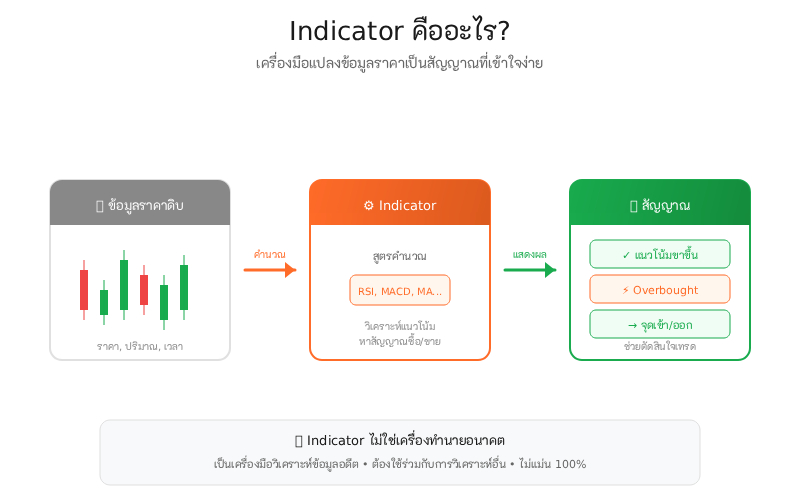
Such simple technical tools as are moving averages, RSI, and MACD, can help beginners to confirm trade signals, thus avoiding premature decisions. When combined with proper risk management, these tools act as waypoints, to be well-observed so that traders may acquire consistency and confidence while developing their trading skills.
Trend following strategy
This strategy involves determining prevailing market direction and executing trades all favoring the existing trend. Tools like moving averages and the Relative Strength Index (RSI) help in ascertaining momentum. Trend following mitigates the risk of trading against the market’s might and provides consistent moneymaking opportunities in a Forex and binary options trading strategy.
Linking those positions that are bullish with an uptrend and bearish with a downtrend is a rule, as in an immediate upward trend, the trader worth his salt would open a buying position on an upticking currency pair, whereas the opposite shall apply. Trying to pick the top and the bottom is never the issue, but letting yourself be carried by the tide over the length of the trade wins the game. This method proves useful in strongly trending markets, that is, when the price moves consistently in one direction.
Key tools for trend following:
- Moving Averages (50, 100, 200 periods)
- RSI (to confirm overbought and oversold zones)
- Trendlines
- MACD
Breakout strategy
Breakout trading occurs when the price breaks through a pattern containing specific support and resistance levels. This suggests tremendous movement-based momentum. Breakout trade setups can be entered by traders from the confirmation of increasing volume and volatility when moving beyond those levels. Despite accommodating great potential in the market for taking positions, breakout trading points need significant risk management skills, since this can be a hive of agony from false breakouts.
The breakout occurs when the market moves from a consolidation zone in which the price was horizontally moving. When the price exits this phase, there is much higher chance that a sharp move will occur due to the sudden rush of trades going short or long.
What to look for before a breakout trade:
- Strong price movement outside support or resistance
- Higher trading volume
- Large candlestick bodies
- Low volatility before the breakout
Trend vs Breakout Strategy Comparison:
| Feature | Trend Following | Breakout Trading |
| Market type | Trending markets | Ranging or consolidation markets |
| Risk level | Medium | Higher |
| Entry timing | During trend pullbacks | At the moment of price expansion |
| Best for | Consistent long-term trading | Short-term high momentum trades |
| Suitable for beginners | Yes | With practice |
When trend-following strategy and breakout strategy are combined one can adjust to the continuously changing scenarios of the market. When the market is moving in a trending manner, it is advantageous to adopt a trend-following strategy, whereas when the market is preparing for extreme price moves, breakout strategies come in handy.
Risk management techniques
To become a successful forex trader, Risk management is the most significant aspect. One way of losses control is to set stop losses. A lot of exposure can be controlled by stopping out, which would be not possible until manual action has been taken. Position sizing also diminishes losses significantly. It’s a way by which one can ensure a small portion of trading capital to risk on a trade. In addition, diversity of trades, both in terms of currency pairs and timeframes, can also limit still further the leverage appeasing the likelihood of it turning against you under any one condition.
Forex brokers & trading platforms
Some Forex trading platforms are industry standards used by traders worldwide, while others are proprietary (broker-specific) solutions. Not all platforms are equally regulated or suited for traditional Forex trading; some specialize in binary options or CFDs, which carry different risks.
IG Group
One of the largest and most established global Forex and CFD brokers. IG offers access to thousands of markets, including Forex, indices, commodities, and shares. It provides both its own advanced trading platform and integration with MetaTrader.
Strengths
- Very strong regulation and reputation
- Advanced charting and research tools
- High liquidity and fast execution
Limitations
- Higher minimum deposits than many retail platforms
- Interface may feel complex for beginners
XM
XM is a popular broker among Asian and Thai traders due to its low entry barrier and support for MetaTrader 4 and MetaTrader 5. It is known for competitive trading conditions and multilingual support.
Strengths
- Low minimum deposit
- Supports MT4 and MT5
- Good educational materials
Limitations
- Spreads can be higher on small accounts
- No proprietary trading platform
XTB
XTB operates its own platform called xStation 5, which is designed for fast execution, strong charting, and built-in market analytics. It also supports multiple asset classes beyond Forex.
Strengths
- Modern, easy-to-use platform
- Built-in market sentiment and statistics
- Strong charting and execution
Limitations
- No MT4 support
- Some advanced features require experience
Pepperstone
Pepperstone is widely used by active and professional traders. It supports MT4, MT5, and cTrader, making it one of the most flexible brokers in terms of platforms.
Strengths
- Very low spreads
- High-speed execution
- Multiple trading platforms
Limitations
- Not focused on beginners
- No proprietary beginner platform
Alternative online trading platforms
These platforms are widely used in Thailand, especially for Forex CFD and binary-style trading, rather than traditional Forex.
IQ Option
A well-known retail trading platform offering Forex, CFDs, options, stocks, and crypto through a simple web-based and mobile interface.
Strengths
- Very low minimum deposit
- Beginner-friendly design
- Demo account available
Limitations
- Not a classic Forex broker
- Limited compatibility with MT4/MT5
Exnova
Exnova is a modern retail trading platform offering Forex, crypto, and CFDs with a clean, simplified interface.
Strengths
- Easy to use
- Low entry barrier
- Web and mobile support
Limitations
- Fewer advanced trading tools
- Not designed for algorithmic trading
Sabiotrade
A prop-trading platform that allows traders to trade with funded capital after passing a challenge. It uses institutional-style trading software.
Strengths
- Access to large trading capital
- Advanced charting and indicators
- No personal risk on funded accounts
Limitations
- Requires passing evaluation
- Not a traditional broker
Quadcode
Quadcode is a technology provider that powers trading platforms used by many brokers, including some brands linked to IQ Option.
Strengths
- Fast and stable trading engine
- Supports Forex, options, and CFDs
- Good mobile and web experience
Limitations
- Depends on the broker using the Quadcode system
- Regulation varies by provider
| Platform / Broker | Type | Platforms | Best For | Complexity |
| IG Group | Regulated broker | IG Platform, MT4 | Professional traders | High |
| XM | Regulated broker | MT4, MT5 | Beginners and Forex traders | Medium |
| XTB | Regulated broker | xStation 5 | Active retail traders | Medium |
| Pepperstone | Regulated broker | MT4, MT5, cTrader | Scalpers and pros | High |
| IQ Option | Retail platform | Web, mobile | Beginners | Low |
| Exnova | Retail platform | Web, mobile | Casual traders | Low |
| Sabiotrade | Prop trading | Proprietary | Performance traders | High |
| Quadcode | Platform provider | Web, mobile | Broker-specific users | Medium |
Using forex analysis tools
Use of analysis tools helps traders to make decisions based on data, NOT guesswork. Analysis offers a broader comprehension of the market when combining aspects of technical and fundamental analyses. When both analyses are combined, traders are better prepared when attempting to discern market direction, timing, and potential risk.
Technical indicators or tools help in determining when to enter or exit a trade, while a fundamental aspect expounds on WHY a market moves. This consensus brings a tighter decision-making ratio between Forex trading and Binary options as emotion and impulse majorly wane away.
Introduction to technical analysis
Charting is an examination of the past price charts and patterns to try to predict future price movements. Some of the most common indicators that help a trader to identify trend, momentum, and potential reversal points include Moving Averages, Bollinger Bands, and MACD. These kind of technical tools are also used in the forex and binary options signals for better trade predictions.
The rationale for many traders is combining several indicators to confirm a signal. For instance, a moving average crossover will confirm trend direction, while a holding of the RSI can suggest whether the market is getting overbought or oversold.
Popular technical indicators include:
- Moving Averages (trend direction)
- RSI (momentum and overbought levels)
- MACD (trend and reversal signals)
- Bollinger Bands (volatility and price range)
- Support and Resistance levels
Fundamental analysis basics
Fundamental analysis assesses currency value in terms of economic indicators, central bank policy, and geopolitical events. The publication of data such as GDP, employment, and interest rate decisions significantly affects market sentiment. Indeed, keeping an eye-out on the news and economic calendars is vital for any trader, particularly in binary options strategy, to try to predict market trends.
Currencies are often sharply responsive to economic sentiment. A country reporting strong growth and high interest rates usually shows a strengthening currency, while weak economic data would lead to depreciation.
Foreign exchange market FAQs
How much money do I need in order to get started on Forex?
Most brokers facilitate a minimum of $100 to start trading, but with more capital at your disposal, maintaining flexibility and the potential for better risk management becomes more viable.
Is Forex trading safe for beginners?
Forex trading is, of course, risky just like any kind of investment. Nevertheless, proper education, risk management, and a reliable broker could make Forex trading less risky for beginners. Newbies must trade small and trade on demo accounts to acquire experience and eventually confidence.
How can I minimize risks in online Forex trading?
You can minimize your risks by using stop-losses and appropriate position sizing, by diversifying trading executions, by removing perpetrating emotional attachments, by following the news or simply using the best currency trading methods with consistent track records.
How can I start forex trading as a beginner?
Start by choosing a regulated broker, opening a demo trading account, and learning basic chart analysis and risk management. Move to real trading only after you can trade consistently on demo.
Is $100 enough to start forex?
Yes, $100 is enough to start if you use a micro or cent account and low leverage. You must trade small positions and focus on protecting capital, not fast profits.
How to turn $100 into $1000 in forex?
It requires strict risk control, a profitable strategy, and time. There is no safe way to do it quickly. Consistent small gains and disciplined compounding are the only realistic path.
What is the 5-3-1 rule in trading?
It means trading 5 Forex currency pairs, using 3 strategies, and focusing on 1 setup per day. This keeps trading simple, structured, and disciplined.
Read also about:







Leave A Comment